
These Medals Don’t Belong in a Vault
One of the most gratifying things I get to do as Illinois Treasurer is to reunite lost Purple Heart medals with the rightful families.
These special military medals are earned through bravery and sacrifice to our nation. My family holds them in special reverence. My Uncle Doug earned one posthumously.
Early in my time as Treasurer, I noticed a Purple Heart medal in a case in our vault, the place we store the contents of safe deposit boxes that banks turn over to us after they determine they’ve been abandoned.
I asked who the medal belonged to, and they told me that we didn’t know, and that was why it was in the vault. Surely, we knew the name of the person who had rented the safe deposit box it was found in. I encouraged my staff to become detectives and track down the owner.
It is not so easy to track down the people who earned these medals. Purple Hearts look the same. They don’t say how they were earned. Most don’t have the owner’s name engraved on them.
The recipients of a Purple Heart were killed or wounded in combat. Many of these heroes returned home at a relatively young age and might have moved around before settling down. Some of them carry trauma.
Despite those obstacles, we have had great success returning these medals, reuniting a record 17 Purple Hearts with their owners. This year alone, we have held five reunification ceremonies. Today, I want to share those stories with you.
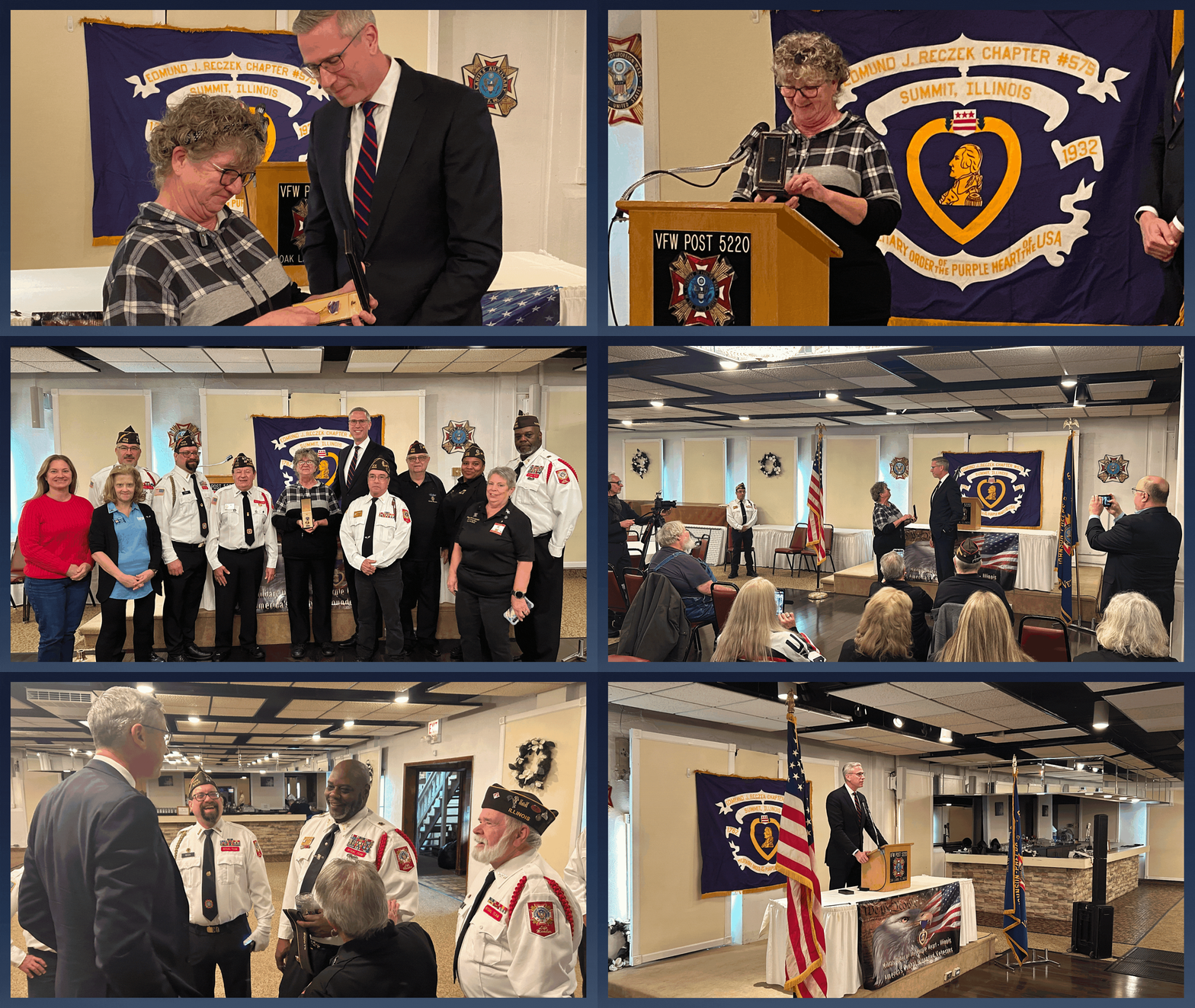
It’s always an honor to return a Purple Heart to a veteran or a veteran’s family, and I had that privilege again on Monday when Patty Knies received her uncle’s medal.
-
On Monday, the day before Veterans Day, I returned the Purple Heart earned by Army Rifleman James Bennett, who was twice wounded during World War II in Europe. He frequently wrote to his wife, Ann, assuring her of his safety and downplaying his sacrifice. The Bennetts had a daughter, Susan, who was not expected to survive beyond early childhood but lived into her 50s. After Susan’s parents passed, Mr. Bennett’s niece became Susan’s legal guardian. “He was such a wonderful man, and it is an honor to hold his Purple Heart,” medal recipient Patty Knies told me at the Oak Lawn VFW.
-
Army Private Stephen J. Grabowski earned a Purple Heart and Bronze Star during the closing days of active fighting in Europe during World War II when a German grenade struck his bunker and buried him with debris. The son of Polish immigrants in Chicago was paralyzed from the waist down, returned home and lived at Hines VA Hospital until he died at 56 in 1974. I was proud to return his medals to his grandniece. “You have no idea how much this means to me,” Chrystal Cantrell told me during a ceremony in Marion in August.
-
A month earlier, I was in Decatur to hand over the Purple Heart earned in World War II by Army Private John L. Moore to his brother, Jerry Moore, who also served in the war. John Moore survived D-Day but was wounded a few weeks later by shrapnel in his right wrist, left knee and lower right leg. He returned to Peoria, married his wife Grace, and raised five children, and worked in the trades despite chronic pain from his war injuries. “I questioned where his Purple Heart went. Nobody knew,” an emotional Jerry Moore told me. “I don’t think I could have had a better honor than receiving this from my brother.”
-
A few weeks before that in June was the special ceremony reuniting the Purple Heart earned by World War II Army Private First-Class Edward Gorski Jr. with his grandson, also an Army veteran. Gorski earned the medal during a nighttime mortar attack reminiscent of a scene in the historical miniseries Band of Brothers. He sought refuge in a foxhole when a fire lit by his fellow soldiers for warmth drew enemy fire. The 19-year-old survived despite wounds to his face and nearly losing an eye. “My grandfather continued making sacrifices, working long hours in private security and taking care of his family,” grandson Shawn Gorski told me.
-
In May, I returned the lost Purple Heart medal of Army Cpl. Henry Van Der Noord, one of four brothers to serve their country in the war. He was hit in the back with shrapnel while fighting to liberate the Philippines under the direction of General Douglas MacArthur. He became a police officer and started a construction company with one of his brothers. “That’s amazing. I really appreciate you and your office,” grandson Christopher Reed, a veteran who grew up in Lansing and Batavia, told me.
The families’ stories have been heartwarming. Still, we have some work to do.
In honor of Veterans Day, I am asking the public to help us return the six Purple Hearts we are still protecting. Please check out our Operation Purple Heart website and see if any of the information we have rings a bell.
If you have any information, please share it with us. It could be a clue that helps lead us to return these symbols of sacrifice to our country. We want them in the warm embrace of family, not in our cold vault.
Sincerely,
Michael
Operation Purple Heart Exists to Honor Our Heroes
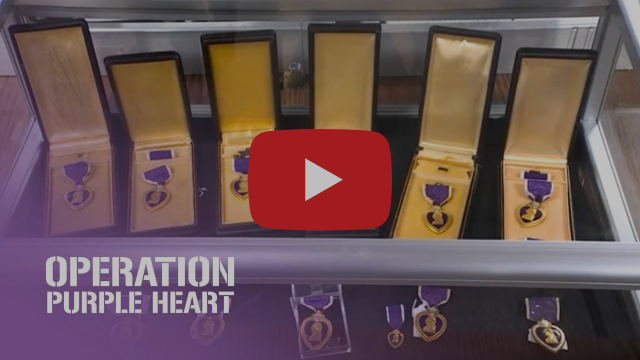
Watch Treasurer Michael Frerichs talk about his personal connection to Operation Purple Heart.
I started Operation Purple Heart in November 2021 to fulfill an important mission: to return Purple Heart medals to their rightful owners
In this video, I explain my personal connection with Operation Purple Heart and why getting these medals back in the hands of veterans and their families is so meaningful.